
"Ethiopian natural process"
1000 article(s) found

Analysis on the mixed situation of Essel Coffee Bean varieties _ the reasons for the complexity of taste and flavor of Ethiopian coffee beans
Professional coffee knowledge exchange more coffee beans Please pay attention to the coffee workshop (Wechat official account cafe_style) if you are students who like African beans very much, it should be easy to find that beans in Ethiopia are generally of different sizes and have significantly lower evenness than those in Kenya. Whether it's Yega Xuefei or Sidamo, whether it's washing or tanning, sometimes the same batch.

Ethiopian Coffee Fine Coffee Bean Origin Cochel / Haloba / Shaquiso / Bita Village
Professional coffee knowledge exchange more coffee bean information please follow the coffee workshop (Wechat official account cafe_style) Ethiopian coffee boutique coffee bean origin Cochel / Haloba / Shaquiso / Bita Manor flavor and taste characteristics? The birthplace of coffee is Ethiopia in the pigeon garden belt of East Africa. I accidentally pulled a very classic coffee when I went to the coffee fair.

Clear and bright Ethiopian Yega Xuefei G1 coffee flavor description method grinding scale varieties
Ethiopia Yega Xuefei G1 Coffee Flavor description Grinding scale Variety introduction European monastic academics opened up the local coffee growing industry, which was later run by coffee communities or cooperatives in villages around the town. There are no special plantations here, and coffee trees are naturally scattered in the forest and countryside. During the harvest season, the Ethiopian Coffee Trading Company will go to town to buy.

Sweet Ethiopian Coffee Flavor description Variety characteristics introduction of boutique Coffee beans
Ethiopian coffee beans grow in close to the natural environment, after years of planting under the same growth conditions, Ethiopian coffee beans have gradually adapted to the environment here. More than 60% of coffee beans are grown in forests or semi-forests. Large-scale coffee-growing villages account for about 35% of the country's total coffee production. Many of these are used.

Aromatic and rich Ethiopian coffee flavor Taste Manor Features of producing area Introduction Fine coffee beans
Ethiopian coffee beans grow in a near-natural environment. After years of cultivation under the same growing conditions, Ethiopian coffee beans have gradually adapted to the environment here. More than 60% of coffee beans are forest or semi-forest grown coffee. Coffee farming villages produce about 35 percent of the country's coffee. Many of these are used.

Ethiopian Sidamo Coffee beans 90+Ninety plus how much is Sidamo Coffee
Professional coffee knowledge exchange more coffee bean information please follow the coffee workshop (Wechat official account cafe_style) Ethiopia is the birthplace of coffee. Ethiopian coffee has the same deep cultural accumulation as Chinese tea. Ethiopian coffee is called the coffee of the wilderness, and a cup of Ethiopian coffee can bring you a primitive experience you've never had before. Ethiopia is blessed with

Is Harald mocha coffee good in Ethiopia? information on Harald coffee producing area
Professional coffee knowledge exchange more coffee bean information please follow the coffee workshop (Wechat official account cafe_style) Ethiopia is the origin of coffee. Once upon a time, there was a town in southern Ethiopia called Kafa, where there were some red fruits. The shepherd found that the sheep was so excited after eating the fruit that they picked it and tasted it, so the fruit was pawned.

Jasmine-scented Ethiopian Sun Yega Shifeiwaka Coffee Flavor treatment method
Ethiopia is an ancient country with a history of 3000 years of civilization. The Hamite people who immigrated from the southern Arabian Peninsula were the earliest inhabitants. Monlinique I reigned in 975 BC. The Kingdom of Nubia was established in the 8th century BC. Anchor China Coffee Network from the 1st century to 976 AD, the Ethiopian Empire, also known as the Kingdom of Aksum, was established in Aksum in the north, in the 4th and 5th centuries.

Ethiopian Coffee Rituals-Travel to Ethiopian Origin for an Authentic Cup of Coffee
Professional barista exchanges, please pay attention to coffee workshop (Weixin Official Accounts cafe_style) Presumably, Ethiopia is already very familiar to the majority of coffee lovers. The important position of this magical country in the coffee world can be said to be unparalleled. This is not only because Ethiopia is the birthplace of coffee in the world. There is a saying: good coffee is grown.

Mocha matari is produced in the northern part of Yemen and has a strong sour taste.
Although Yemen is located in the Middle East with the Arabian Peninsula, it can actually be said that it is almost closely connected to the African continent located opposite the Red Sea. This geographical contiguity is also illustrated by the way Ethiopian coffee travels through Yemen. Ethiopian coffee processed naturally is still known as mocha. As for coffee exports, due to the complexity of the circulation process,

Is the price of Ethiopian coffee beans expensive? introduction of Ethiopian coffee beans. Is Ethiopian coffee good?
Professional coffee knowledge exchange more coffee bean information please follow the coffee workshop (Wechat official account cafe_style) ● Essex coffee bean story Ethiopia is located in a country full of wonders, where all Arabica coffee comes from. The Kaffa Forest is the beginning of everything. Kaffa is located in the southwest of Ethiopia. Centuries of natural progress in Kaffa

Overview of Ethiopia Green Coffee beans Why buy Ethiopian Green Coffee beans
Coffee beans in the Yirgacheffe Yegashifi, Sidmao Sidamo, Harrar Hara and Limulim regions are located in the Ethiopian highlands and account for 63 per cent of Africa's contribution to the global supply of raw coffee beans according to regional symbols. Ethiopia has long been coveted for its famous Arabica coffee tree and its aromatic and rich coffee beans. Yirgac of Sidamo province

Ethiopia Coffee Farm how to deal with the processing of Ethiopian single bean grade
For the exchange of professional baristas, please follow the coffee workshop (Wechat official account cafe_style) YIGACHEFFEE Yegashev Coffee in short: diverse and unique. Many of the great washed beans show explosive aromas, full of citrus and floral aromas, and have a light and elegant nature. Undeniably, this area is a high-quality and interesting coffee bean production area, of which the most

Ethiopian Coffee Estate Brand Features Type Flavor Description Taste Treatment Introduction
Ethiopian coffee beans grow in a near-natural environment. After years of cultivation under the same growing conditions, Ethiopian coffee beans have gradually adapted to the environment here. More than 60% of coffee beans are forest or semi-forest grown coffee. ... villages where coffee is grown extensively.

Introduction to the characteristics of Ethiopian Coffee Flavor and Taste Manor
Although the Ethiopian Yirgacheffe coffee is petite, it is gentle and delicate and sweet. As the hometown of coffee, thousands of years of planting history and processing tradition in Ethiopia have created high-quality washed Arabica beans. Light baking has unique sweet aromas of lemon, flowers and honey, soft acidity and citrus flavors, fresh and bright on the palate. No.

Ethiopian Coffee Flavor description Grinding degree Taste characteristics Fine Coffee Manor introduction
This kind of coffee grows in areas ranging from 1400 to 2000 meters above sea level. After wet processing, this kind of coffee has a rich fragrance, a full fruit with moderate acidity and alkalinity, high quality and attractive spicy flavor. It is estimated that out of 49000 hectares of cultivated area, the average annual production of this coffee is 29000 tons (equivalent to 480000 bags of 60 kg coffee). Dejima (Djimma)

Taste treatment of Ethiopian Coffee beans Variety Grinding scale Manor
Although the Ethiopian Yirgacheffe coffee is petite, it is gentle and delicate and sweet. As the hometown of coffee, thousands of years of planting history and processing tradition in Ethiopia have created high-quality washed Arabica beans. Light baking has unique sweet aromas of lemon, flowers and honey, soft acidity and citrus flavors, fresh and bright on the palate. No.

Does Ethiopian Coffee Farm have good beans? the planting and processing of single beans in Ethiopia
For the exchange of professional baristas, please follow the coffee workshop (Wechat official account cafe_style) YIGACHEFFEE Yegashev Coffee in short: diverse and unique. Many of the great washed beans show explosive aromas, full of citrus and floral aromas, and have a light and elegant nature. Undeniably, this area is a high-quality and interesting coffee bean production area, of which the most
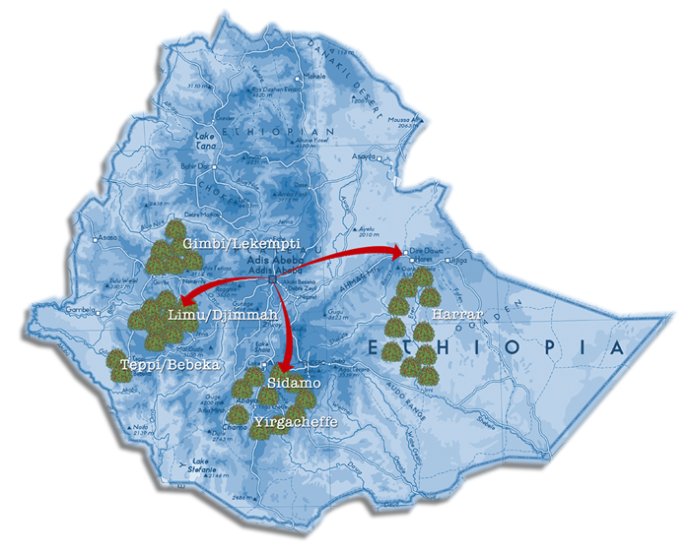
Harar Hara, an Ethiopian Ethiopia boutique coffee producing area, is an eastern Ethiopian producing area.
Professional baristas please follow the coffee workshop (Wechat official account cafe_style) Harar is a famous producing area in eastern Ethiopia, ET sun-cured coffee representative, but also a boutique coffee world sun treatment, or natural treatment classic. Harar, with a history of more than 1300 years, Harar is a veritable ancient city. Although archaeologists believe that the city was built in the 10th century

Rich texture of Ethiopian Coffee Manor flavor and taste characteristics of boutique coffee
Although the Ethiopian Yirgacheffe coffee is petite, it is gentle and delicate and sweet. As the hometown of coffee, thousands of years of planting history and processing tradition in Ethiopia have created high-quality washed Arabica beans. Light baking has unique sweet aromas of lemon, flowers and honey, soft acidity and citrus flavors, fresh and bright on the palate. No.